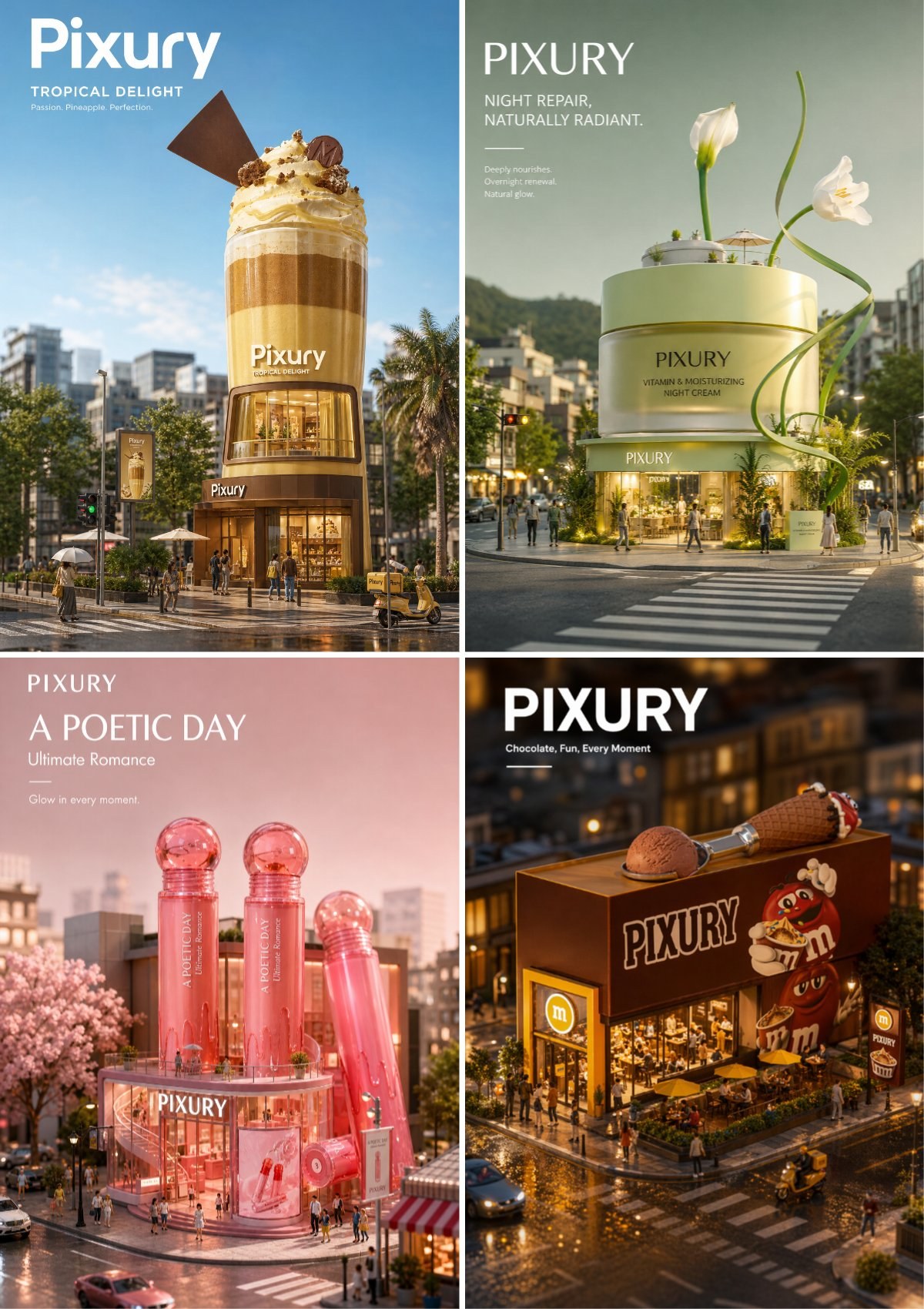
[General Tips for Brand Miniature Architecture Posters] Please generate a vertical 2:3 ultra-realistic miniature architecture photography poster. 【Information】 Brand Name: 【Enter the brand name, e.g., Starbucks / McDonald's / Coca-Cola / Tropicana】 Architectural Scene: 【Enter the architectural function, generally a high-end commercial store selling the uploaded image, e.g., corner cafe / fast food restaurant / factory cross-section / fresh juice workshop】 Main Poster Title: 【Enter the main logo title】 Subtitle: 【Enter a brief English subtitle】 [Visual Requirements] The main subject of the image is a large "[product packaging]", designed as a fully functional "[architectural scene]", seamlessly integrated with the real urban environment. The overall composition should maintain the precise proportions of the miniature model while presenting an ultra-realistic photographic quality, like a finished poster that combines high-end architectural model photography, commercial space model photography, and advertising-grade macro photography. Carefully identify and utilize all elements of the uploaded images, and select appropriate atmospheres and architectural scenes based on the tone and style of the uploaded images. [Main Design] The main packaging must retain the brand's typical identifying characteristics, including the brand's primary color scheme, packaging outline, logo placement, material details, and authentic structure. The packaging itself should logically translate into architectural space: entrances, glass display windows, interior functional areas, terraces, floors, roof structures, and display or production areas must all be logically consistent. Don't just create an empty shell; make it appear truly operational, visitable, productive, or functional. [Environmental Integration] The scene must be integrated into a real city or real industrial/public space, not an isolated staged shot. The scene may include elements such as street corners, sidewalks, zebra crossings, streetlights, traffic flow, shop windows, roadside greenery, parking spaces, manhole covers, urban building facades, industrial areas, park paths, and public benches. The environment should be rich, realistic, and detailed enough to withstand close scrutiny. [Characters and Narrative] Incorporate miniature figures with realistic proportions, natural movements, and clearly defined scenes. Examples include customers queuing, staff at work, delivery riders picking up orders, workers conducting inspections, tourists taking photos, and pedestrians passing by. Figures should not look like dolls or figurines but should possess the quality of natural, candid shots from real urban life. If a figure is holding an umbrella, the details—such as the hand gripping the handle and a natural, realistic posture—must be clearly rendered; avoid issues like floating umbrellas, misalignment, or the umbrella appearing to be glued directly onto the body. [Poster Composition] The image should use a 2:3 vertical poster composition. Place the main building in the lower-middle section of the frame, leaving ample negative space at the top for the title. Utilize a three-quarter perspective combined with a slight high-angle view (moderate height; avoid an excessively high angle). The main building, entrance, areas of human activity, and key details should be sharp and clear, while the background exhibits a natural shallow depth of field and soft blur effect. [Lighting, Shadow, and Materials] Set the lighting and shadow effects based on the tone of the uploaded image. The overall style should be mature, refined, realistic, and sophisticated. [White Poster Text] Add modern, clean, and understated white text in the upper-left area of the image. The text must be legible, error-free, and well-typeset using a modern sans-serif font. Avoid lengthy descriptions, cluttered layouts, or a "cheap template" look. The text content should complement the image, creating the feel of an authentic, professional commercial poster. [Style Keywords] Hyper-realistic miniature architectural photography, authentic brand space, 2:3 commercial poster, building-as-giant-product-packaging, integration with real urban environments, macro photography, architectural model photography.