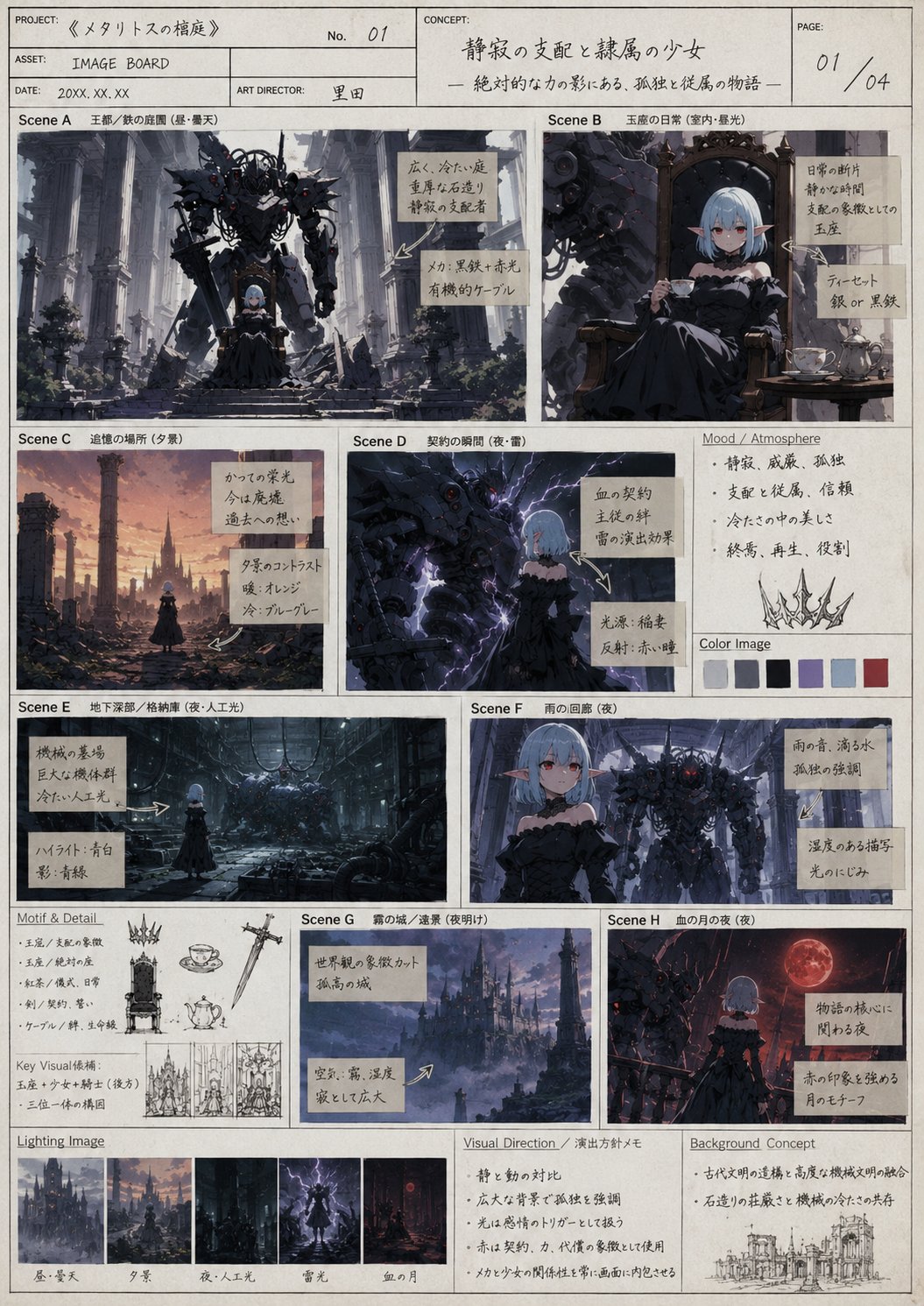
Generate an image based on the character in the provided reference image as the base design. Draw a "professional image-board reference page produced in the early stage of commercial animation production." Keep the reference character's face, hairstyle, hair color, pupils, contour, body type, silhouette, costume design, and identity traits as a character. Do not turn it into another character. Do not turn it into a live-action style. This is not a finished illustration. This is not a poster. This is not a character setting sheet. This is an image board made to share the worldview and atmosphere among the staff of an animation work. The purpose is a work-image-sharing reference for the director, storyboard, art director, background art, photography, and production staff. The image is an image-board reference page actually used on the production floor of Japanese commercial animation. Arrange and organize multiple image shots as a reference page. Each shot is not a finished illustration, but treated as visual reference material that shares the work's direction, atmosphere, worldview, emotional expression, color design, and staging policy. Naturally include the following: locations symbolizing the work's world, slices of the character's daily life, moments evoking key scenes of the story, spaces symbolizing emotion, scenery expressing the overall atmosphere, situations that convey the relationships between characters, motifs that may recur in the work, scenes expressing an impressive time of day or seasonal feel, situations whose meaning can be felt without explanation, and symbolic shots that may stay in the audience's memory. If the user specifies location, season, worldview, genre, or theme, prioritize those. If not specified, naturally infer the work's world from the reference character's design, expression, costume, color scheme, and atmosphere, and build the most convincing image board. Each shot should have a different angle, different time of day, different emotion, different atmosphere. Repeating the same composition is forbidden. The character can be drawn fairly large, but does not have to be a protagonist composition; in some shots it may be placed small. It is not a character introduction — prioritize conveying the work's world itself. Emphasize scenery, light, weather, time of day, color, atmosphere, emotional expression. Naturally arrange handwriting-style memos, staging notes, color notes, atmosphere notes, simple titles, arrows, sticky notes, draft production instructions, etc. Also naturally arrange organizing labels that may exist in real production materials such as Scene A / Scene B / Scene C / Mood / Atmosphere / Lighting / Color Image / Visual Direction / Background Concept. Text info should have a reference-like density but be organized without hurting readability. The layout has the atmosphere of a Japanese commercial-animation production document collection from the 1990s-2000s. Lots of information but orderly. As a printed sheet, keep natural margins. The whole page has the texture of production material that has actually been printed, stored, and scanned. Naturally add slight paper texture, copy-paper feel, scan feel, slight age-related fading, and the worn feel of being bound in a document folder. It is not a character illustration collection, but make it look as much as possible like real production-floor reference used by animation staff to share the work's image. Not finished artwork, but give it the realism of "an image-board reference produced in the early stage of an animation work that originally existed, happening to be made public."